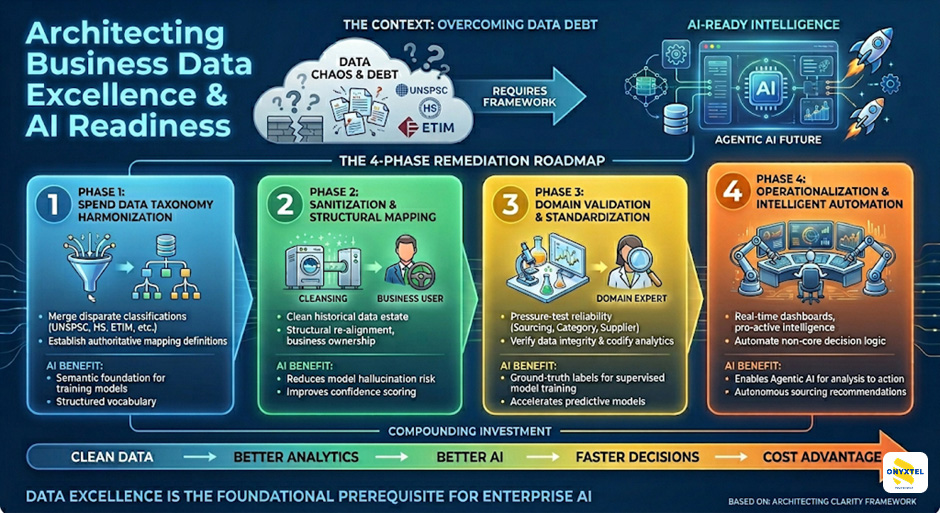
The modern enterprise does not suffer from a scarcity of data. It suffers from Data Debt — the cumulative cost of tactical concessions made in the name of operational expediency, and the single greatest barrier to realising enterprise AI.
Organisations routinely absorb fragmented classification standards — UNSPSC, HS Codes, ETIM — through M&A integrations, customer mandates, and project deadlines that bypass centralised governance. Each shortcut feels justified in isolation. Collectively, they become the cracked foundation upon which enterprises attempt to build their AI future.
The Strategic Blind Spot
Fragmented standards infiltrate the master data layer and create a black box — data that is obfuscated and incompatible. Leadership loses spend visibility. Cost-saving strategies are built on shifting sand without clear certainty. Supplier consolidation opportunities remain invisible.
The deeper cost is the AI opportunity foregone. Every enterprise AI initiative depends on a clean, consistent, well-governed data estate. You cannot train a trustworthy model on untrustworthy data. Data excellence is not merely a precondition for better analytics — it is the foundational prerequisite for enterprise AI.
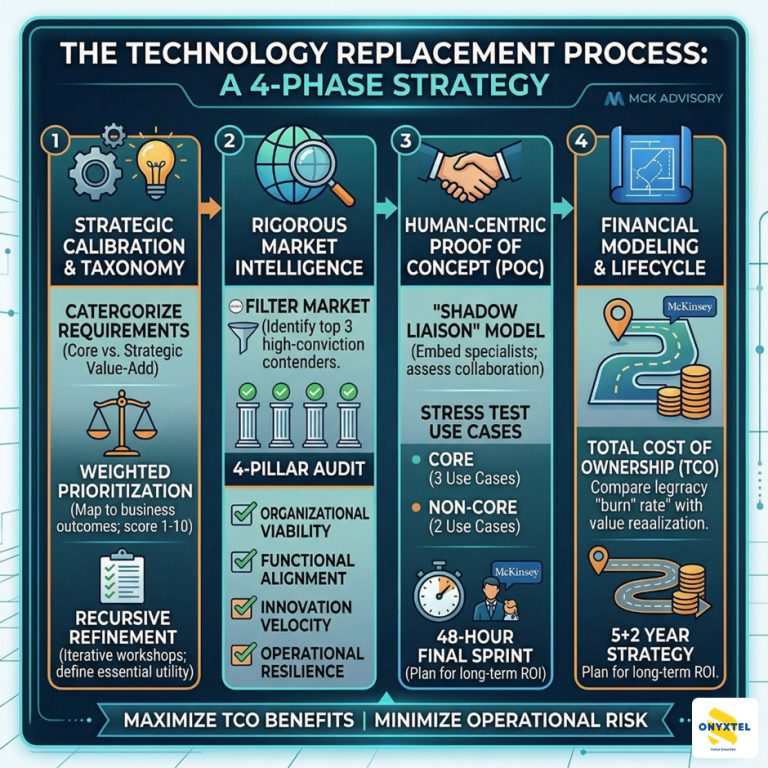
The 4-Phase Roadmap
| Phase | Action | AI Alignment |
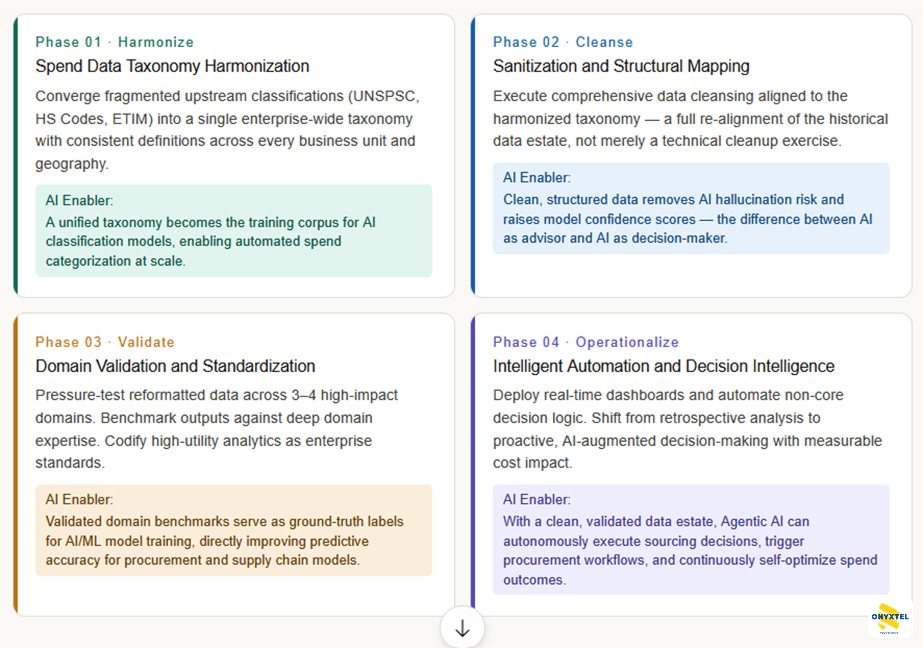
| 01 — Harmonize | Converge all fragmented classifications (UNSPSC, HS Codes, ETIM) into a single enterprise-wide taxonomy across every business unit and geography. | The unified taxonomy becomes the structured training corpus for AI classification models and intelligent automation. |
| 02 — Cleanse | Re-align the entire historical data estate against the harmonised taxonomy. A business-owned structural exercise, not merely an IT cleanup. | Clean, consistently labelled data eliminates model hallucination risk — elevating AI from advisory tool to trusted decision-making agent. |
| 03 — Validate | Stress-test cleansed data across 3–4 high-impact domains: sourcing, category management, supplier performance, and cost-to-serve. Codify outputs as enterprise analytics standards. | Validated benchmarks become ground-truth training labels, directly accelerating the accuracy of predictive procurement and supply chain models. |
| 04 — Automate | Deploy real-time dashboards and automate non-core decision logic to shift from retrospective analysis to proactive decision-making. Automate small decisions so that stakeholders can focus on key strategic decisions | A governed data estate enables Agentic AI — autonomous sourcing, dynamic contract benchmarking, and self-optimising procurement workflows. |
The Strategic Imperative
The organisations that will capture disproportionate value from AI are not those with the largest technology budgets — they are the ones that got their data house in order first with strong foundation.
Clean, structured data supports quality analytics. Better analytics produce better AI. Better AI produces faster decisions. Visibility produces cost advantage — and that advantage compounds with every domain & cycle.
Architecting clarity is not a project. It is a governance discipline, and the single most critical prerequisite for sustainable competitive advantage in an AI-driven enterprise.